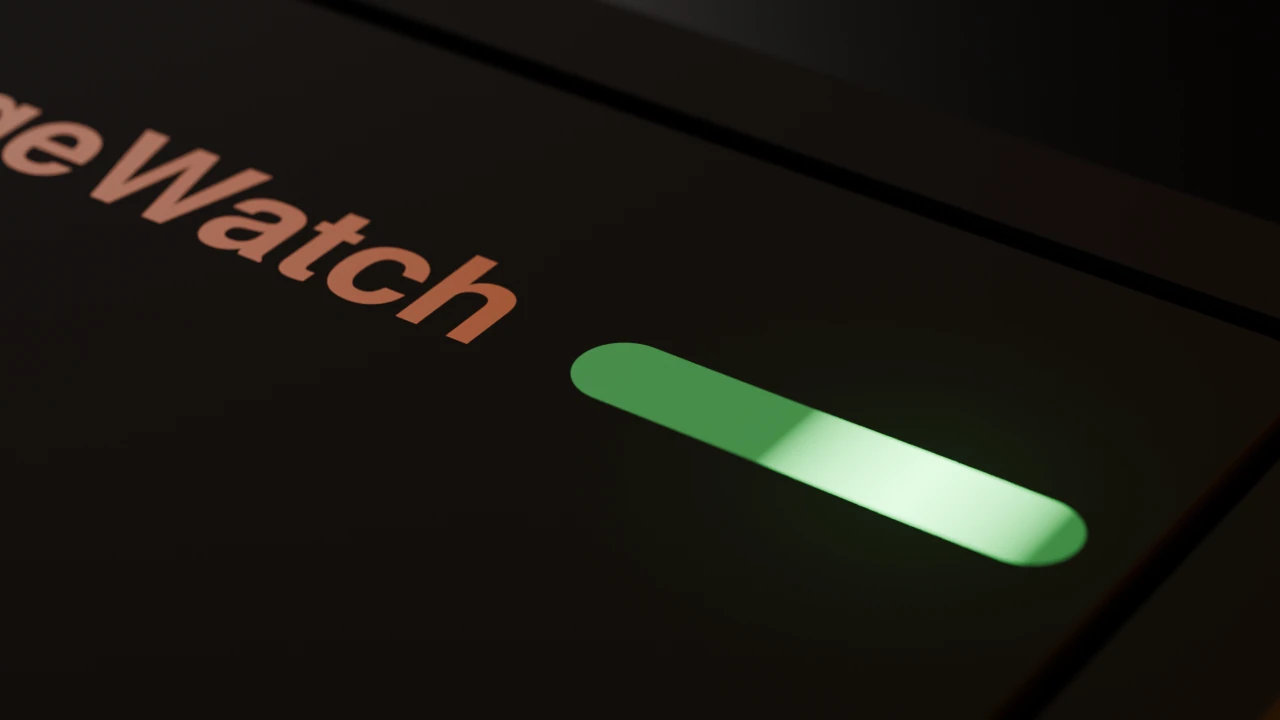
Green: charging
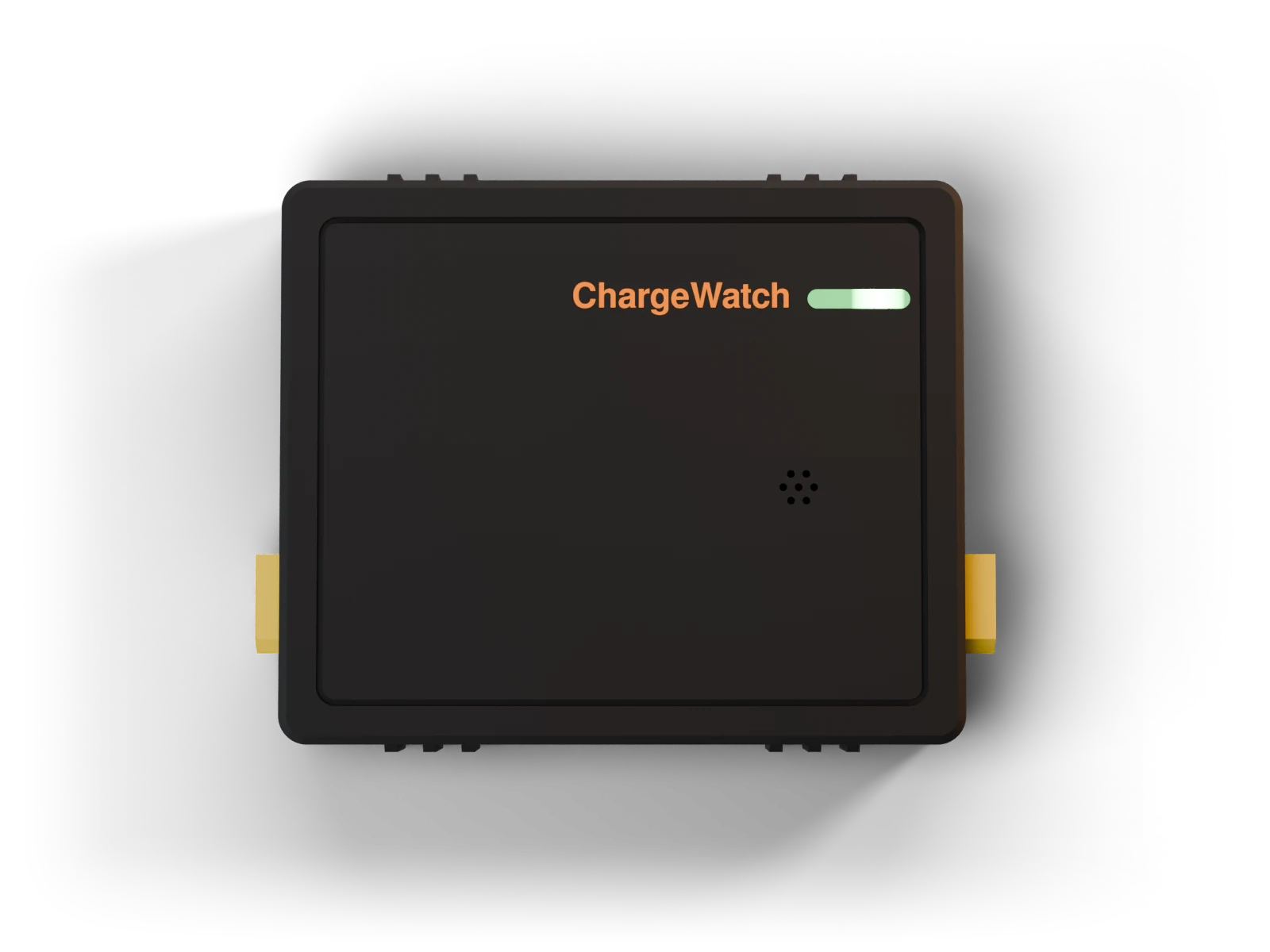
The charger passed its check. Charging, finished or ready.
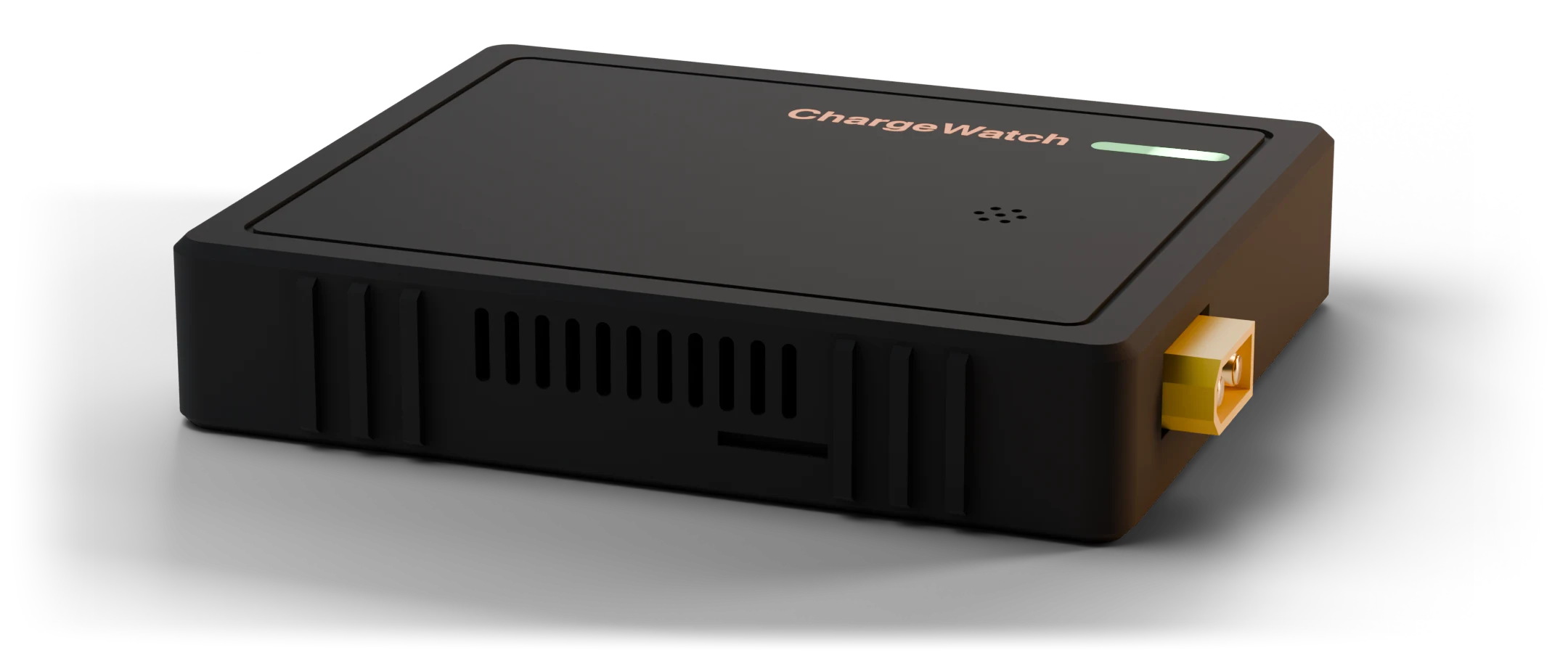
For landlords, fleets and repair shops. ChargeWatch sits between an e‑bike or e‑scooter charger and its battery. It checks the charger, limits the charge, cuts the power when something is wrong and keeps a record of every charge.
You cannot check every charger a resident or a rider plugs in. Charging is the one moment you can control.
Before any power reaches the battery. A charger that does not suit the battery is refused.
From the first minute to the last, with nobody needing to stand over it.
When the charge is done, when a limit you set is reached, or when something looks wrong.
Every charge, every refusal and every cut-off, with the time and the reason.
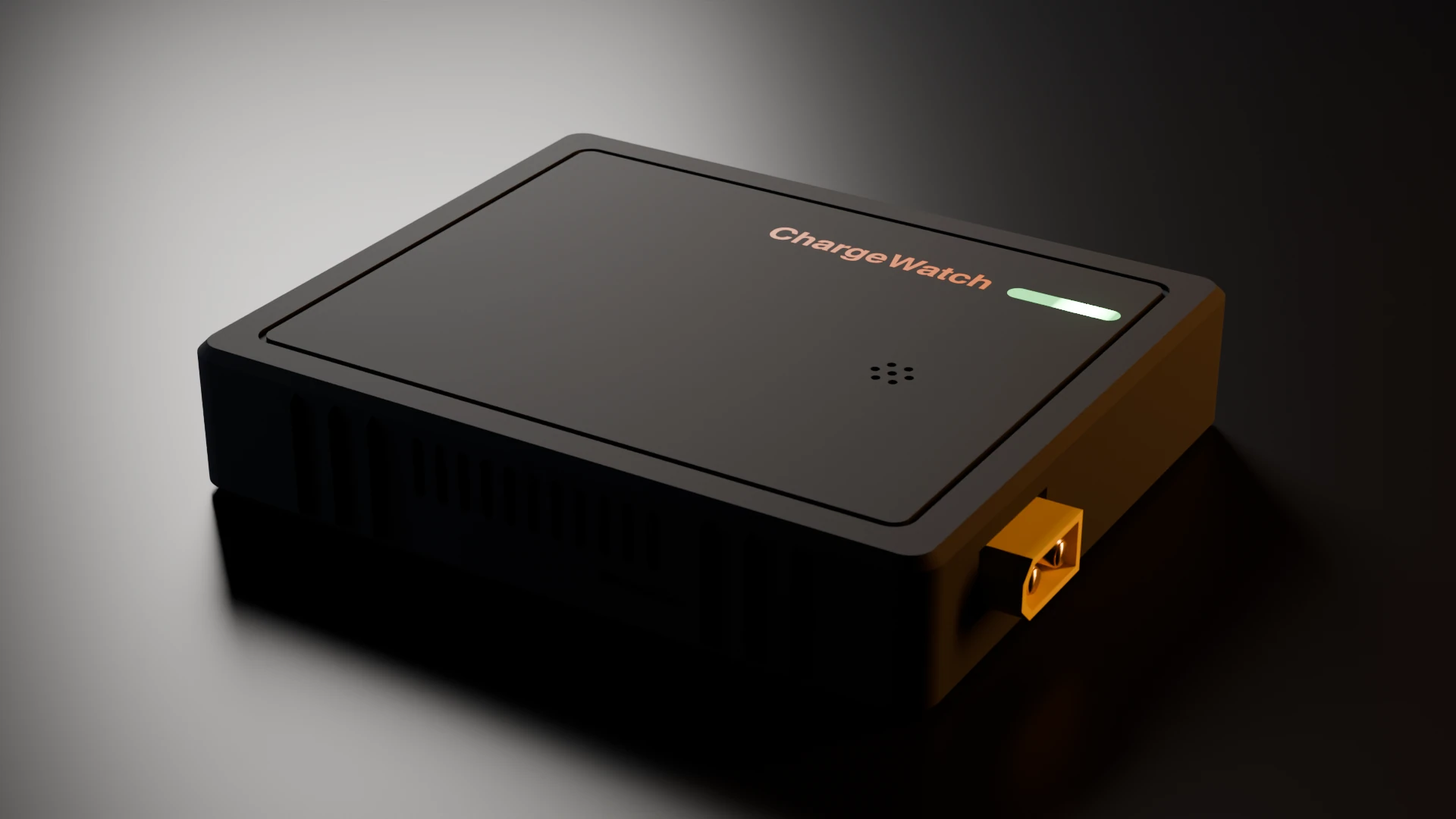
A basic charger fills the battery to 100% every time and has no idea how long it has been on. ChargeWatch adds the limits a smart charger has, to the charger you already own.
These limits are built and tested in software. Bench tests on real batteries come next.
Stopping short of full is gentler on a lithium-ion battery and is plenty for most days.
Set the longest a charge may run. After that the power goes off, whatever the charger is doing.
Stops when more has gone in than the battery should take.
Set the most current you allow. Above it, the charge ends.
Charging a frozen lithium-ion battery damages it. ChargeWatch waits.
Residents keep their own chargers. Each charging point gets a charger check, a cut-off and a record that can support a fire risk assessment.
Many batteries, many chargers, one shared room. A wrong charger is refused and each battery builds a charge history.
A charge record for a customer's battery before it goes back out, made in the ChargeWatch Workshop app: how much charge it took, how the charge ended and your own verdict.
ChargeWatch can be built into a bay, a locker or a charger. We are open to supply and licensing conversations.
How many charging points, which batteries and chargers, and who looks after the room.
Where the units go, how long they stay, and what is measured. Nothing is changed on your chargers or batteries.
Units fitted from early 2027. You receive the charge record for every point, and we get the test data.
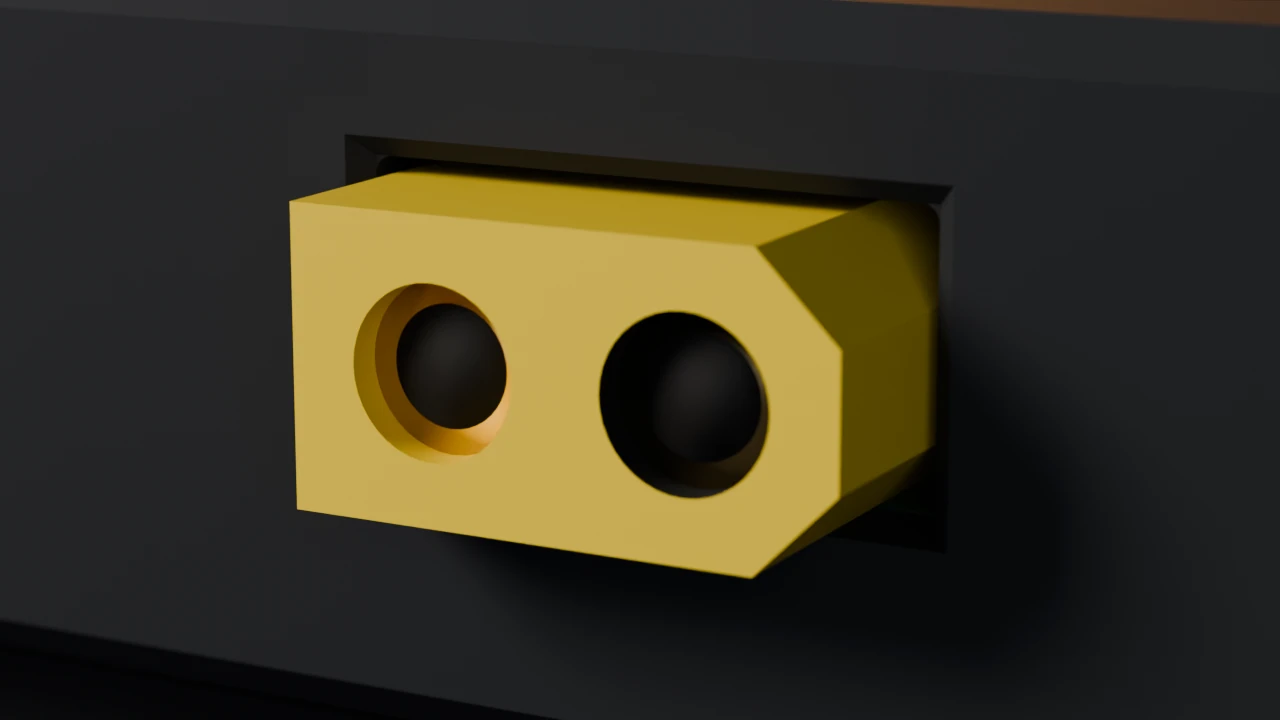
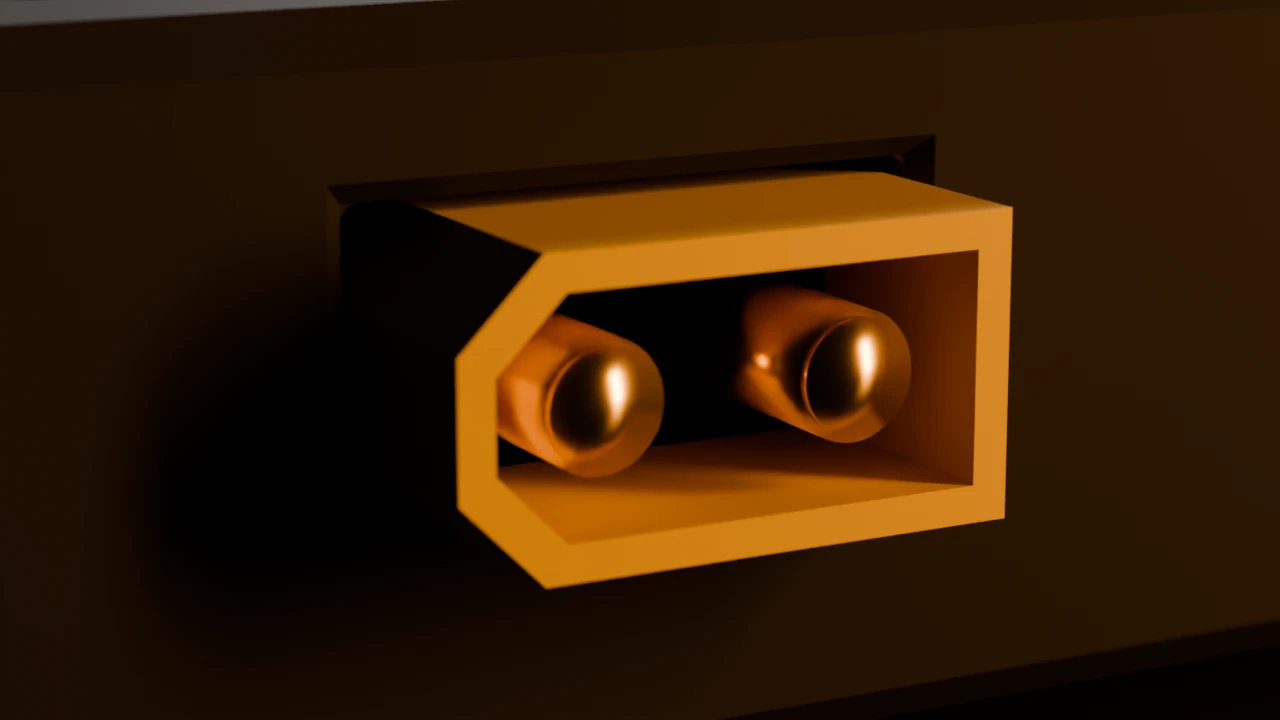
Your charger plugs into one end.
Your battery plugs into the other end.
On a shelf, on the wall, or inside a store or locker. The two plugs are different, so each lead fits one end only.
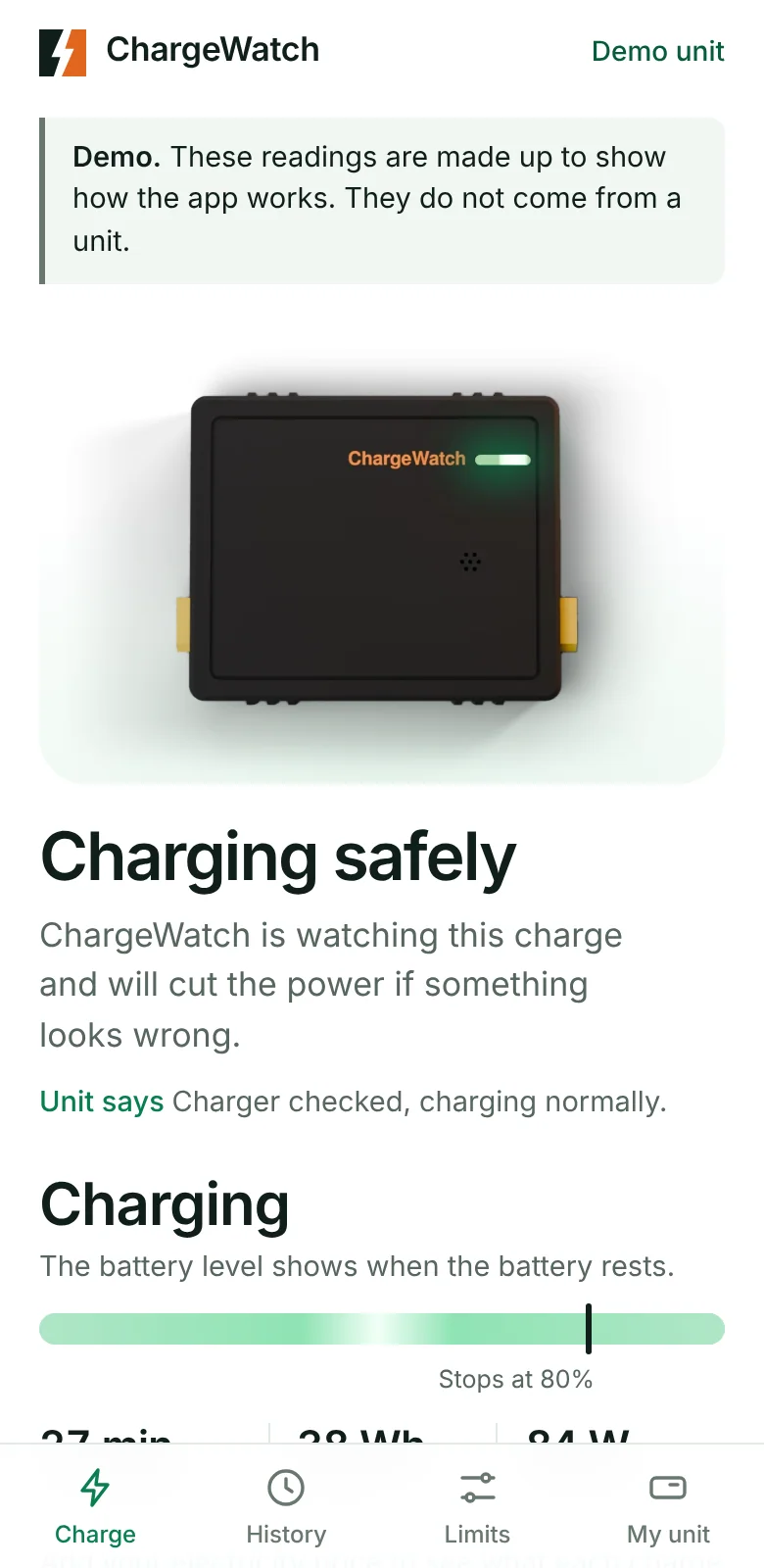
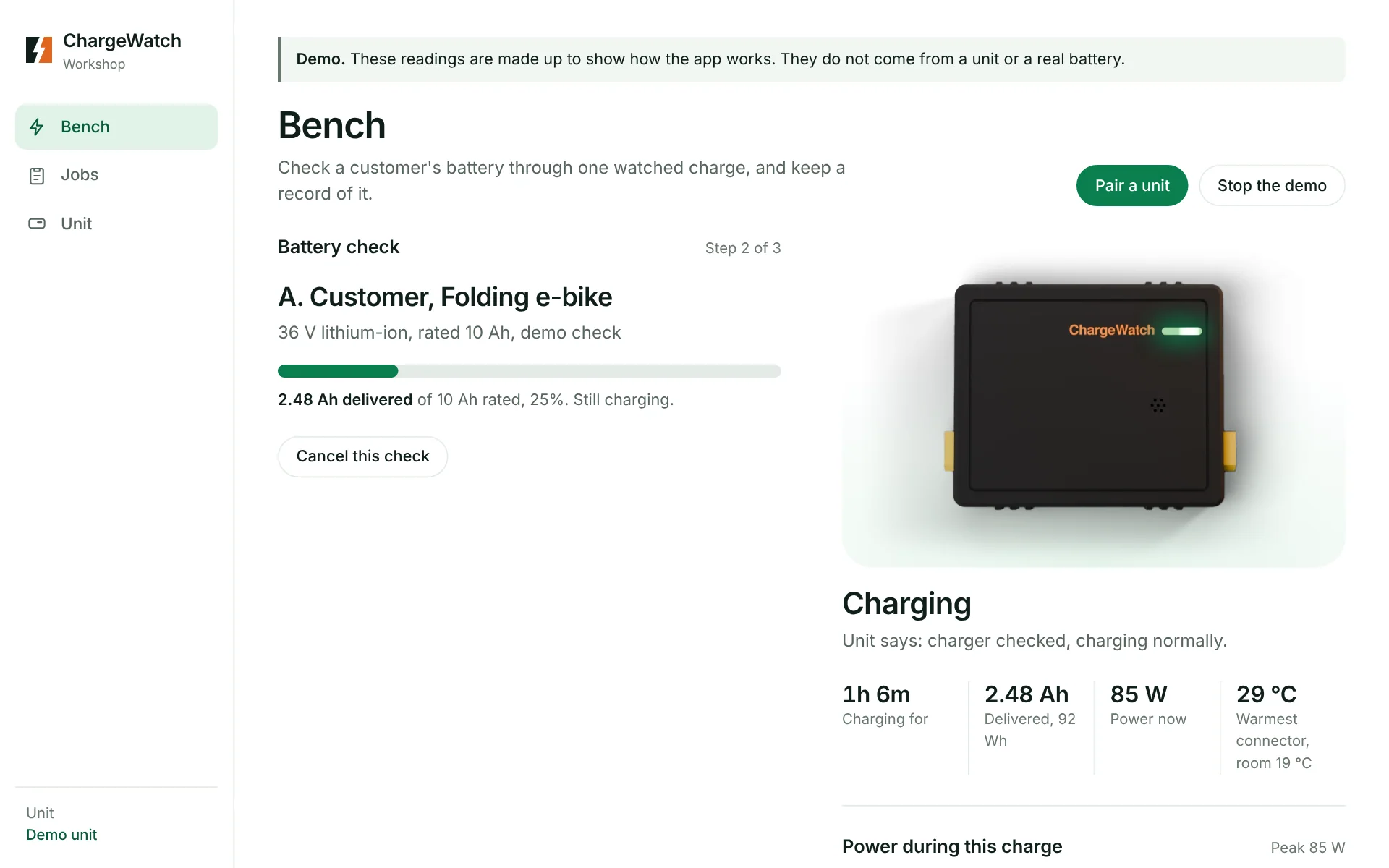
Both run in Chrome or Edge on Android and on a PC, and as desktop apps for Mac and Windows. An iPhone app is planned.
See in plain words whether the charge is going well, choose where it stops, and look back at every charge and what it cost.
Check a customer's battery through one watched charge and hand back a written record with your verdict.
Charge records and alerts for many units in one place.
| On every charge | Smart plug | Fire-rated store | Battery's own protection | ChargeWatch |
|---|---|---|---|---|
| Checks the charger suits the battery before power flows | No | No | Varies | In testing |
| Cuts power when it sees a problem during the charge | No | Whole store, on heat | No | Yes |
| Keeps a charge record for each battery | Energy only | No | No | Yes |
| Stops at a charge level you set | Timer only | No | No | In testing |
| Stops a single cell overcharging | No | No | Yes | No |
| Holds in a fire once it has started | No | Yes | No | No |
| Records and alerts for a building or fleet | Hours only | No | No | In development |
The charger passed its check. Charging, finished or ready.
Check the battery or charger before the next charge.
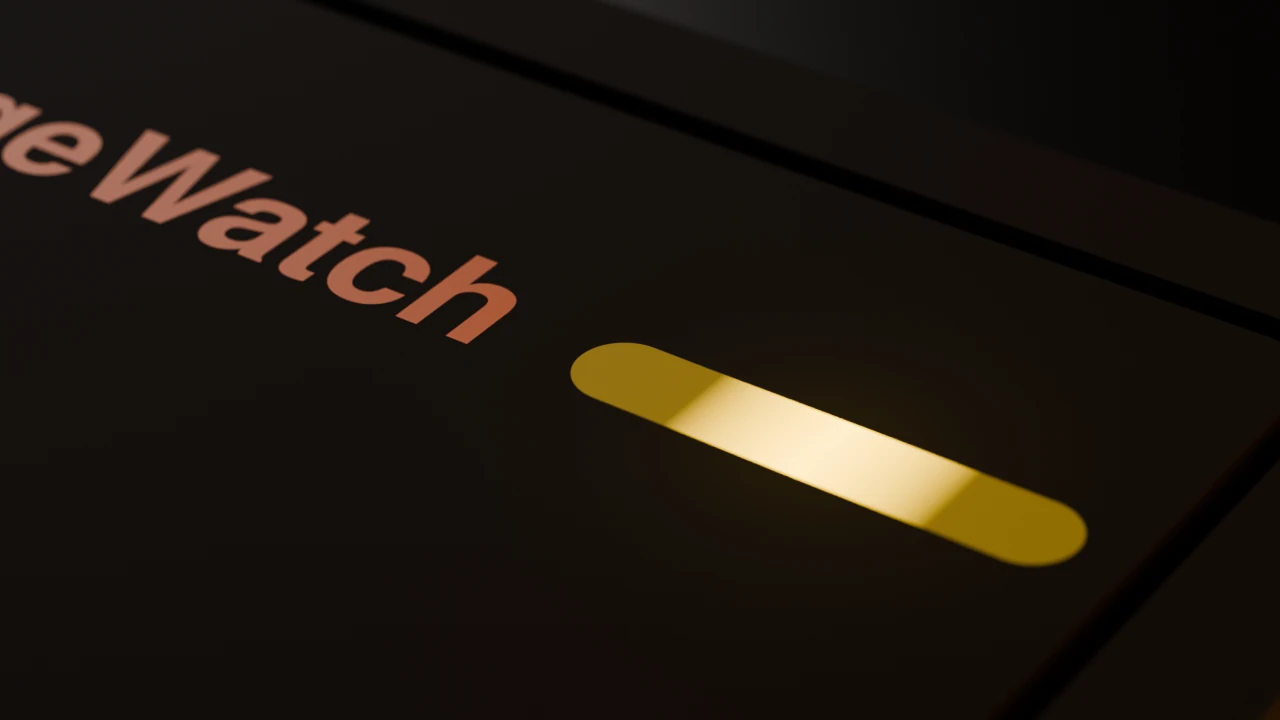
Power to the battery is off until someone checks it.
Kavach means armour. We design charging safety electronics for e-bike and e-scooter batteries in Slough, England.
Started in my master’s dissertation: battery health, UK fire data and housing rules.
From Sep 2025ChargeWatch designed and the first prototype units built.
Oct–Nov 2026UK patent application filed.
19 Nov 2026Kavach Power Ltd incorporated in England and Wales.
26 Nov 2026Supervised charges on real batteries, starting with an e-scooter.
Nov–Dec 2026Units with landlords, fleets and shops.
Early 2027A more advanced version, in design now.
Early 2027Planned: UKCA marking for a first batch.
2027Hari Kammili, founder and director, is an electronics and embedded engineer who leads the design of ChargeWatch. You can check the company on the public register: Kavach Power Ltd at Companies House.
We are building a more advanced ChargeWatch. It keeps everything on this page and goes further.
In design now, alongside bench testing of the current prototype.
It is aimed at the same people: landlords, fleets, repair shops and makers of charging stores and chargers.
What is new, once it is tested and protected. We would rather show it working than describe it early.
Lithium-ion e-bike and e-scooter batteries and the chargers they came with. We confirm each battery and charger with you before a pilot.
None yet. ChargeWatch is a prototype. It is not certified and not on sale.
It switches the charger on and off. It does not change what the charger puts out, it cannot see inside the battery, and it does not contain a fire.
A smoke alarm, a fire-rated store, or the instructions from the maker of the charger and battery.
Leave the area and call 999. Do not move a hot or smoking battery.
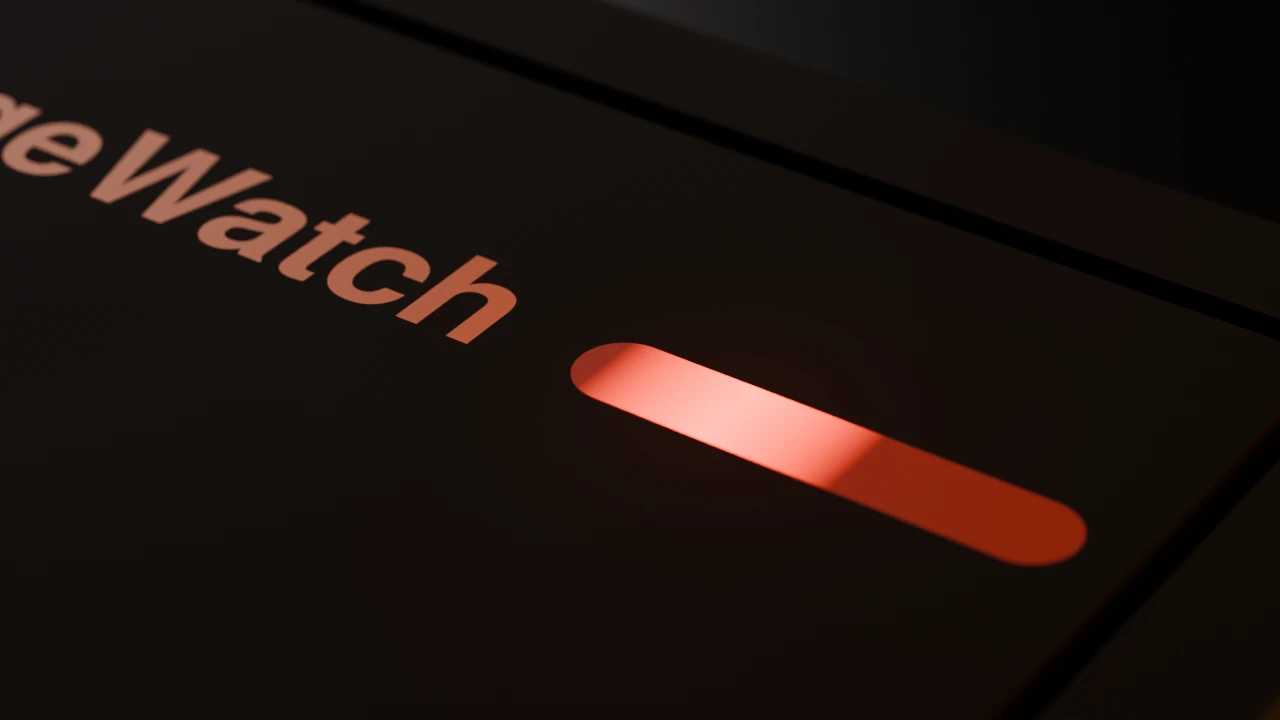
Fault. Power to the battery is off.
Check the battery or charger.
Email the unit number on the label underneath, and what you saw, to the address at the foot of this page.
If you email us or ask about a pilot, we keep your name, organisation, contact details and what you tell us. This site uses no tracking or advertising cookies.
To answer you and to arrange and run pilots. We do not sell personal data. Enquiries are kept for up to 2 years after the last contact.
The ChargeWatch apps talk to your unit over Bluetooth. Charge history and workshop records stay in your own browser. We do not receive them.
You can ask to see, correct or delete your data: email kammilih@gmail.com. You can also complain to the Information Commissioner's Office at ico.org.uk.
Email kammilih@gmail.com with what you found and how to reproduce it. We confirm within 5 working days and update you at least every 30 days until it is resolved.
Only on units you own or have permission to test. Please give us reasonable time to fix a problem before telling anyone else, and never do anything that could make a charger or battery unsafe.
Each unit has its own PIN. The period of security updates will be published here before ChargeWatch goes on sale.
This site is information only, not safety or technical advice. Always follow your charger and battery maker's instructions and your fire risk assessment. The content, name and logo belong to Kavach Power Ltd. English law applies.